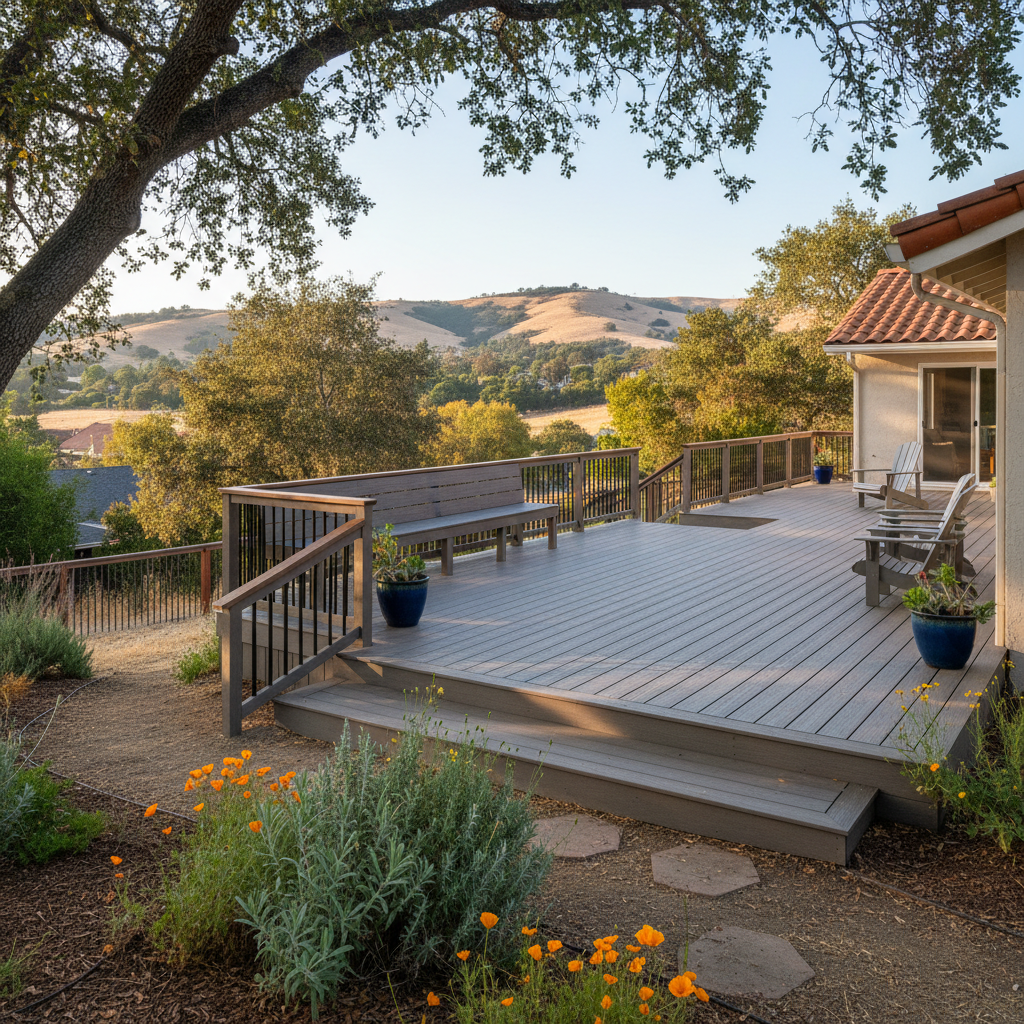
You're probably looking at a Trex deck because you want something tough and easy to take care of, right? Smart move. Here in San Leandro, our weather can really throw you for a loop – beautiful, dry summers, but then those damp, foggy winters roll right in. That unique Bay Area climate means we have to think a bit differently about your Trex deck, both when we build it and how you keep it looking good.
San Leandro's Climate and Your Trex Deck
Our local weather, with its mix of sunshine, fog, and the occasional downpour, can really do a number on untreated wood. That's exactly where Trex shines. It's made to resist rot, warping, and fading, which is a huge deal when you've got that marine moisture coming in off the Bay, especially for homes closer to the Marina.
But "low maintenance" doesn't mean "no maintenance." Trex is a composite material, meaning it's a blend of recycled wood fibers and polymers. While it's super tough, it still reacts to temperature changes and can get mold or mildew if you're not careful. The good news? It's way less hassle than wood.
When to Schedule Your Trex Deck Project
Timing is everything, especially for a big project like a new deck. You might think summer is perfect, and sometimes it is, but let's talk about the best times for us at San Leandro Deck Builders to get to work on your Trex deck.
- Late Spring to Early Fall (May - October): This is generally our sweet spot. San Leandro summers are dry, long, and mostly clear, with average daily highs usually between 70°F and 74°F. Less rain means fewer delays and more consistent conditions for installation. July and August, for instance, typically see almost no rain.
- Watch out for the heat: Trex is durable, sure, but composite decking does expand and contract with temperature changes. If we install it on a really hot day with too little gap, the boards can buckle. We always factor this into our installation, but extreme heat waves can sometimes make things a bit trickier. Darker Trex colors can also get pretty hot under direct summer sun, so keep that in mind if you like walking barefoot.
- Winter (November - April): San Leandro winters are short, wet, and partly cloudy. We get most of our rain between October and May, with February often being the wettest month. While Trex boards can be installed in cold weather, we have to adjust the gapping guidelines for expansion and contraction. Installing in winter means we need to leave wider gaps between boards to account for the expansion that will happen when warmer weather hits. Plus, let's be honest, nobody really wants to be out there building in a downpour.
So, if you're looking to avoid weather-related headaches and get your deck done efficiently, aiming for those drier months is usually your best bet.
Weather Conditions That Affect the Work
Even with Trex, weather plays a role in how we build and how your deck performs.
- Temperature Fluctuations: As I mentioned, composite boards expand when it's hot and contract when it's cold. We account for this by carefully spacing the boards during installation. If we're installing on a cooler day, we'll leave slightly wider gaps, knowing they'll tighten up when the summer sun hits.
- Rain and Moisture: Trex handles moisture much better than wood, but a wet job site is still a slow job site. Heavy rain can delay pouring footings or setting the substructure. San Leandro gets a fair amount of rain in winter, with December and February often being the wettest.
- Fog and Humidity: Our famous San Leandro fog brings humidity, which, combined with debris, can create conditions for mold or mildew growth on any outdoor surface, including Trex. This isn't a structural issue for Trex, but it can definitely affect how it looks.
Protecting Your Trex Investment Year-Round
You've invested in a Trex deck because you want it to last. Here's how you keep it looking great through every San Leandro season:
Regular Cleaning is Key
Don't let "low maintenance" fool you into "no maintenance." Sweep your deck regularly to clear off leaves, dirt, and other debris. This is especially important in the fall when all those leaves drop. That organic matter can trap moisture and create a food source for mold and mildew. A good cleaning once or twice a year with mild soap and water, or a specialized composite deck cleaner, will do wonders. You can even use a pressure washer on a low setting (under 3100 PSI) for a deeper clean.
Deal with Spills Promptly
Trex is stain-resistant, but it's not stain-proof. If you spill food, grease, or drinks, clean them up quickly with warm, soapy water. For tougher stains, there are specific composite deck cleaners that work well. If you've got a grill, put a mat underneath to catch any drips.
Manage Moisture and Shade
Areas that stay damp or shaded are more prone to mold. Make sure water drains off your deck properly. If you have potted plants, lift them occasionally or use risers to allow air circulation and prevent moisture from getting trapped underneath. Keep those gaps between your deck boards clear so water can drain through.
Winter Care
When the colder, wetter months hit, you'll still want to keep an eye on your deck. If you need to remove snow, use a plastic shovel to avoid scratching the surface. Avoid harsh de-icers that contain calcium chloride; rock salt is a safer option if you need it.
Consider an Under-Deck Drainage System
If you have an elevated deck, a system like Trex RainEscape can be a real game-changer. It creates a waterproof barrier under your deck, protecting the substructure from moisture and letting you use the space underneath for storage or even another living area. This is a smart move for protecting your deck's frame from our damp winters and extending its life.
A Trex deck is a fantastic investment for your San Leandro home. With a little seasonal attention and understanding of our local climate, you'll enjoy that beautiful, low-maintenance outdoor space for decades. We've been building these decks all over San Leandro, from the neighborhoods around the Marina to the hills, and we know what it takes to make them last.