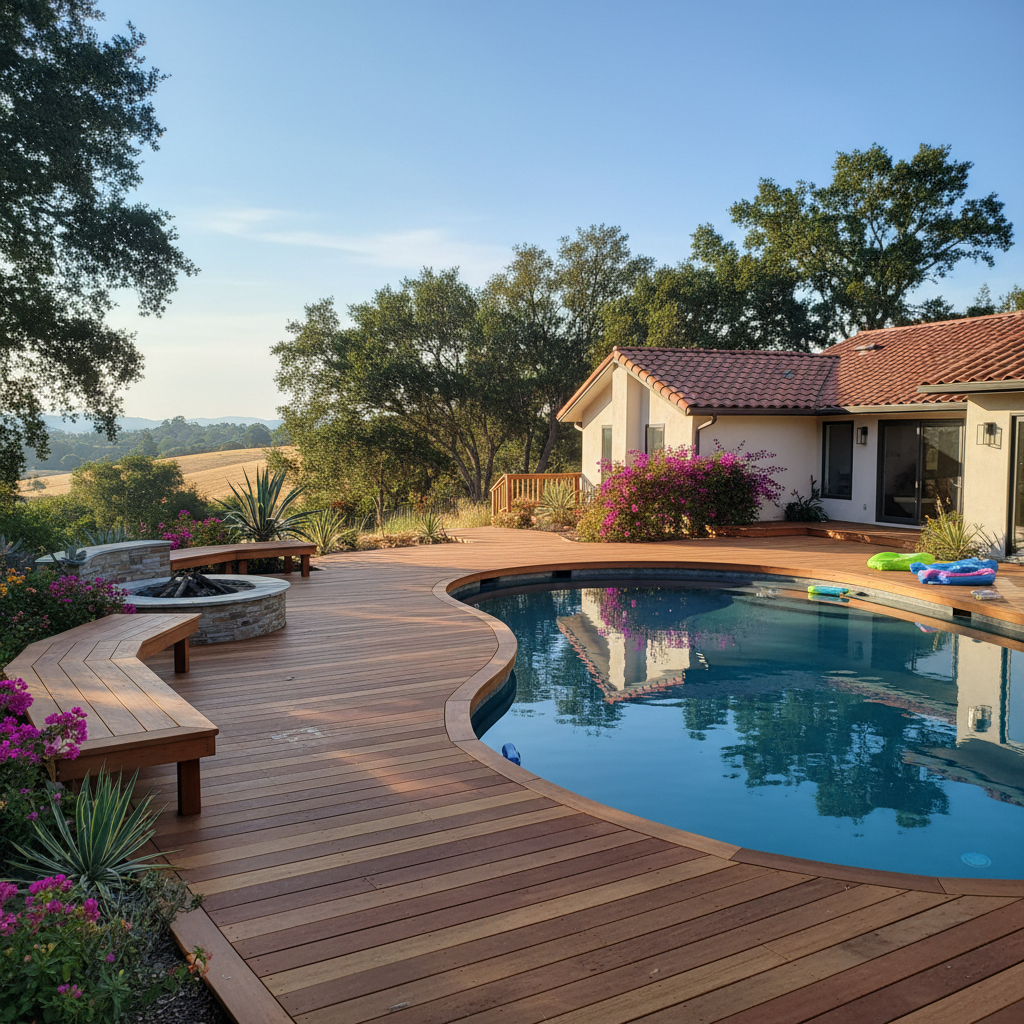
The morning fog rolls off the bay and blankets neighborhoods from Estudillo Estates up toward the hills, only to burn off into a blazing afternoon sun. That constant shift in moisture and temperature takes a real toll on backyard pool decks. If you have a pool surrounded by timber or composite decking, the splash zone combined with our local weather creates a unique maintenance battle.
Timing your projects and protection work around the San Leandro climate is important. Spring and early summer are usually when people start thinking about getting their backyard ready for swimming season. But waiting until May to call a contractor usually means you are stuck at the back of the line. San Leandro Deck Builders usually tells people that late winter or early spring, right before the heavy use starts, is the best time for major maintenance or surface upgrades.
How Our Local Weather Impacts Pool Decks
We do not get freezing mountain winters here, but we do get persistent dampness during the cooler months. That moisture settles right into wood grain and board gaps. When the sun finally comes out hard, it beats down on those damp boards. This rapid cycle of wetting and drying causes warping, splintering, and slippery algae growth faster than you might think, especially right next to a splashing pool.
Pool chemicals add another layer to the mix. Splashing chlorinated or salt water onto your deck materials every weekend eats away at finishes and fasteners over time. If you are running a saltwater pool, you have to be even more vigilant about rinsing down the framing and hardware. Salt residue loves to stick around in hidden joist bays and corrode metal connectors long before its time.
Smart Moves for Year-Round Protection
Keeping your pool deck solid does not require a full-time job, but it does take consistency. Here is what actually works in our area:
- Rinse the deck surfaces regularly with fresh water to strip away chlorine and salt residue after heavy pool weekends.
- Schedule your annual cleaning and sealing for a dry stretch in late summer or early fall when the wood is completely dried out.
- Keep leaves and organic debris swept out from corners and underneath low-clearance areas to stop mold from taking root in the shade.
- Check your fasteners twice a year because expansion from heat pops screws loose.
Do not wait until a board starts rotting through or a ledger board gives way before you look closely at your pool surround. Staying ahead of the moisture and chemical exposure means you get to spend your weekends actually enjoying the water instead of worrying about structural surprises.