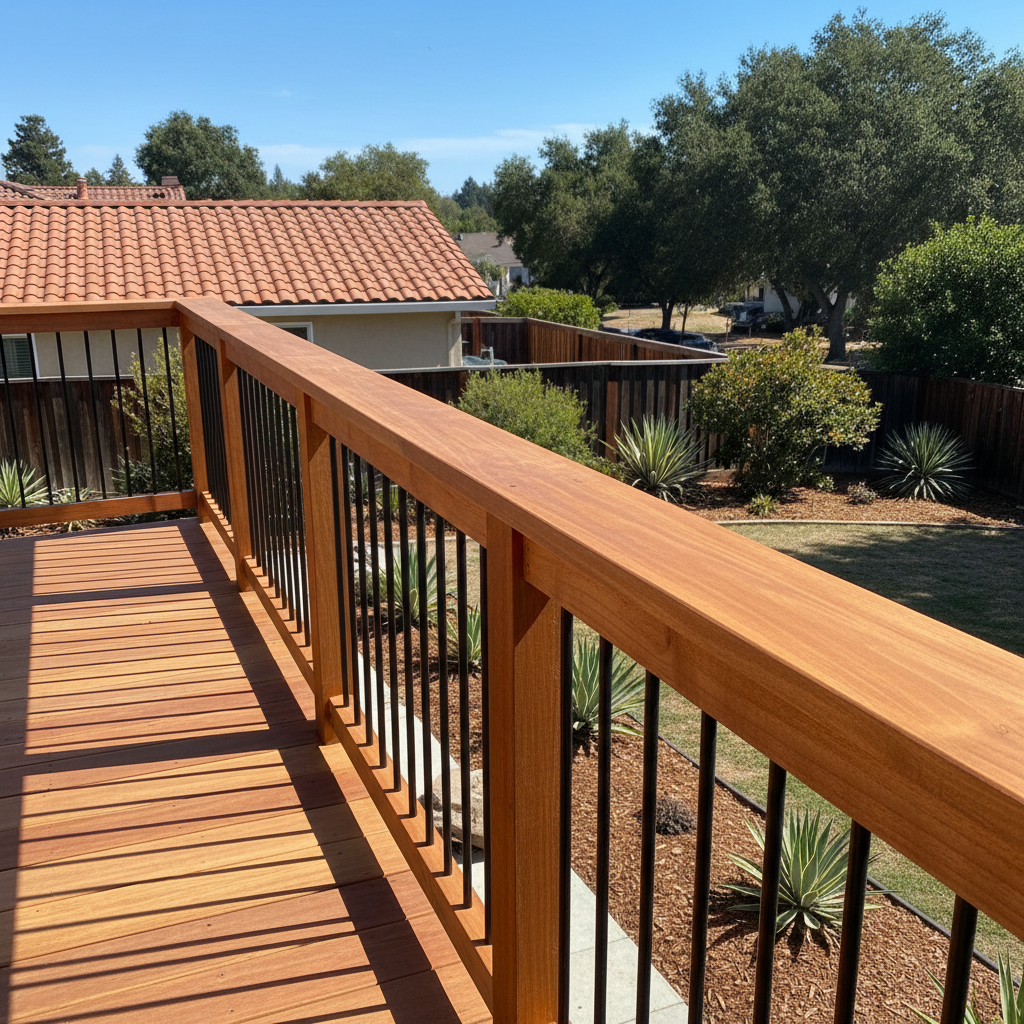
So, you've got a great deck, maybe we even built it for you here at San Leandro Deck Builders. The railings? They're not just there to look pretty, they're a safety barrier. You lean on 'em, your kids might shake 'em, and they're constantly battling the elements. Taking care of those railings means they'll last longer and keep everyone safe. It's really that simple.
Extending the Life of Your Railings
When we install a deck railing, whether it's wood, composite, or metal, we're building it to last. But even the best installation needs a little help from you. The biggest thing you can do to extend its life is protect it from moisture and UV rays. Here in San Leandro, we don't get the extreme winters of some places, but that constant cycle of morning fog and warm afternoon sun can be tough on materials. Wood especially needs regular sealing or staining. I tell folks, think of it like painting your house – you wouldn't let that go for a decade without a touch-up, right? Same deal with your railings.
For wood, you'll want to reapply a good quality sealant or stain every two to three years. Pay extra attention to the top rail, as it gets the most direct sun and rain. If you've got composite railings, they're pretty low maintenance, but a good cleaning now and then keeps them looking new. Metal railings, like aluminum or steel, usually have a powder-coated finish. That's tough stuff, but scratches can happen. If you see a scratch, touch it up with a matching paint to prevent rust from setting in, especially if it's near the bay where salt air can be a factor.
Regular Maintenance: What You Need to Do
Alright, so what does 'regular maintenance' actually look like? It's not a huge time commitment, but it is consistent. I usually break it down into a few simple checks:
- Clean it up: Twice a year, give your railings a good wash. A soft brush, some mild soap (dish soap works fine), and water is usually all you need. Get rid of any dirt, mildew, or cobwebs. For wood, make sure it dries thoroughly afterwards.
- Check for loose bits: Walk around your deck and give every post and baluster a good wiggle. Are any of them loose? Are the screws or bolts holding them tight? If not, grab a screwdriver or wrench and tighten them up. This is probably the most important safety check you can do.
- Inspect the finish: Look for any peeling paint, faded stain, or chipped powder coating. These are the weak spots where water can get in and start causing trouble. Address them quickly.
- Clear the drains: If you have any sort of capped post or decorative element that collects water, make sure it's draining properly. Standing water is a killer for any material.
Honestly, just walking around your deck once a season with a critical eye can save you a lot of headaches down the road. It's like checking the oil in your car – a small effort prevents big problems.
Warning Signs of Trouble
You don't need to be a deck builder to spot problems. Your railings will tell you when something's wrong. Here are the red flags I look for:
- Wobbly sections: This is number one. If a post or a section of railing moves more than an inch or two when you push on it, that's a serious safety concern. Don't ignore it.
- Rotting wood: Look for soft spots, discoloration, or crumbling wood, especially near the ground or where it meets the deck surface. Poke it with a screwdriver; if it goes in easily, you've got rot. This is common in older homes around the Estudillo Estates area, where decks might have been built directly on the ground without proper ventilation.
- Rust: For metal railings, rust spots mean the protective coating has failed. If it's just surface rust, you might be able to clean and repaint it. If it's deep and pitting, the structural integrity could be compromised.
- Cracks or splits: Small hairline cracks in wood are normal, but large, deep cracks can indicate structural issues or excessive drying. For composite, large cracks are rare but definitely a sign of trouble.
- Loose fasteners: Screws backing out, nails popping up, or bolts that spin freely. These are all signs that something isn't holding tight anymore.
Any of these things mean it's time to pay attention. Don't wait for it to get worse.
When to Call a Professional
Look, I'm all for DIY, but there are times when you need to bring in someone who does this for a living. If you see any of the serious warning signs I just mentioned – especially significant wobble, widespread rot, or major structural damage – it's time to call us or another reputable contractor. Trying to patch up a fundamentally unsound railing isn't just risky; it could be dangerous. We've got the tools, the experience, and the knowledge of local building codes to properly assess and fix the problem. Sometimes it's a simple repair, other times it means a partial or full replacement. But getting a professional opinion ensures it's done right and, most importantly, safely. Your family's safety isn't something to gamble with.